
Issued by: Guangdong China Inspection and Testing Co., Ltd |
Sampling Rules
Follow GB/T2828.1-2012 (equivalent to ANSI/ASQ Z1.4), General Inspection Level-II, random sampling. Destructive tests such as hardness, sharpness and chopping-impact test shall be sampled as required. If calculated sample size exceeds total lot quantity, perform 100% inspection.
Defect Levels
1. Critical Defect (Zero Tolerance,AQL=0): Blade crack, large chipping, hazardous sharp burr, folding-knife lock failure. Even one defective unit → full-batch rejection, shipment prohibited.
2. Major Defect (AQL=2.5): Loose rivet / screw, uneven bevel width, bevel angle out-of-tolerance, blade verticality / twist out-of-spec, insufficient sharpness, rust spot, missing mandatory safety warning. Reject batch if over-limit, re-inspection after rework.
3. Minor Defect (AQL=4.0): Light cosmetic scratches, minor uneven rivet height, slight carton mark, no impact on safety and function. Acceptable within allowed quantity.
1 Inspection Workflow
1. Check outer carton, shipping mark and PO documents.
2. Inspect color box, knife sheath, manual and warning label.
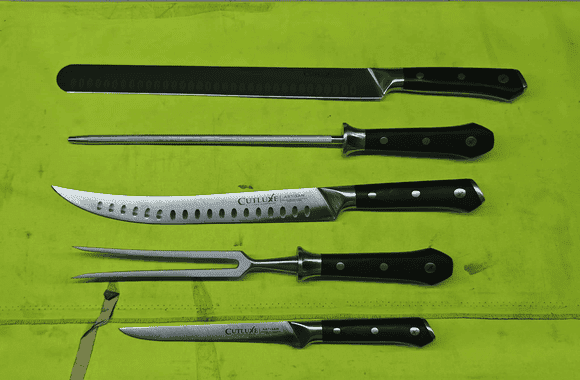
3. Count complete set of accessories.
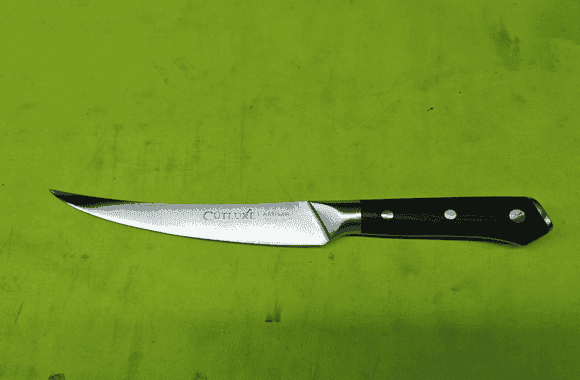
4. Visual inspection for blade, handle, rivet, logo etching.
5. Dimensional & geometry test: overall length, blade length, bevel width, bevel angle, blade verticality.
6. Assembly firmness check; for folding knife test opening-closing & lock-safety.
7. Functional tests: sharpness, hardness, anti-rust, balance; bone-chopping impact test for cleaver.
8. Verify marking, warning statement and user manual.
9. Count defects, take photos, judge accept / reject and generate inspection report.
10. Provide Container Loading Supervision service upon request.
2 Key Inspection Items
Visual Inspection
- Blade: No crack, chipping, rolling-edge. Coating shall not peel off. Logo etching clear.
- Handle: No crack; rivets tight and flush. No hazardous sharp burr on any edge.
- Folding knife: Smooth opening-closing; lock shall not release accidentally.
- Accessories: honing rod, meat fork free of bending and loose joint.
Geometry Measurement (Critical)
1. Bevel width: Measure at 25-35 mm from tip. Double-bevel knife: left-right bevel width shall be symmetrical, deviation ≤0.2 mm. Obvious uneven bevel = Major defect.
2. Bevel total included angle: Slicing / paring knife 30-40°; bone-chopper 40-60°. Deviation>±3° = Major defect. Special design follow drawing / approved sample.
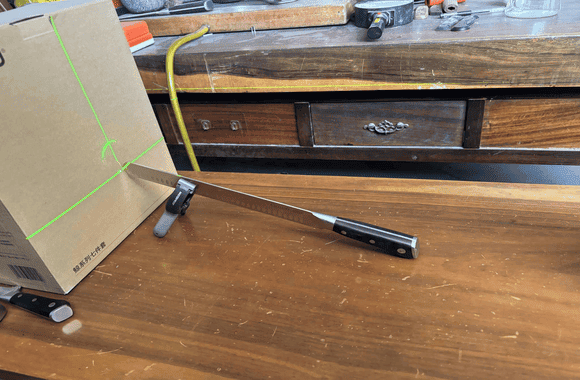
3. Blade verticality: Check against right-angle flat-plate. Lateral offset of blade relative to handle central axis ≤0.5 mm. Obvious twist / warp = Major defect.
Assembly & Functional Test
- Handle twist-test: blade shall not rotate or shake relative to handle.
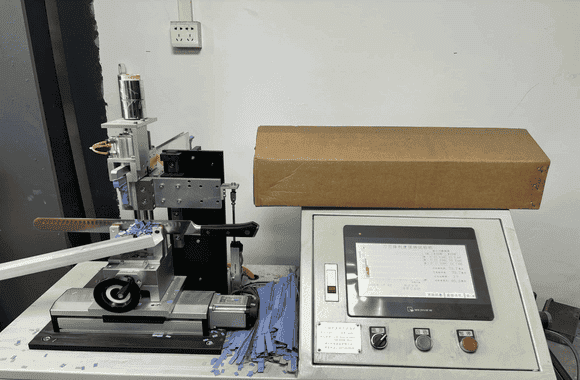
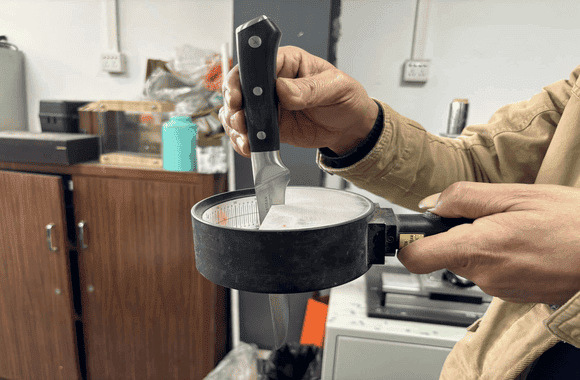
- Sharpness test: cut A4 kraft-paper smoothly under self-weight. Rough tearing = Major defect.
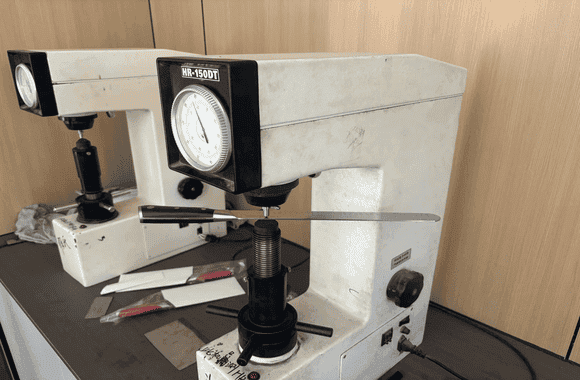
- Hardness HRC spot check; simple anti-rust water-spot test on-site.
- Balance test: check gravity position against approved sample.
- Bone-chopper impact test: 3-times vertical impact on wood board; chipping / crack = Critical defect.
- Folding-knife: open-close 20-times, lock still reliable; accidental unlock = Critical defect.
Marking & Warning
Mark steel grade, brand and origin. Mandatory warning: WARNING: BLADE IS SHARP. KEEP OUT OF REACH OF CHILDREN. CUT HAZARD. User manual shall cover usage, cleaning & maintenance.
3 Defect Classification
- Critical Defect: Blade crack / large chipping, hazardous sharp burr, folding knife lock failure, bone-chopper chipping after impact. One found → full-batch rejection.
- Major Defect: Loose rivet, uneven bevel width, bevel angle out-of-tolerance, blade twist / bad verticality, poor sharpness, rust spot, missing mandatory warning. Reject batch if over-limit, full rework required.
- Minor Defect: Light cosmetic scratches, minor rivet height difference, slight carton mark. Allowed for release within AQL limit, continuous process improvement required.
4 Conclusion
Knives involve critical risks of cutting injury, bevel-grinding craft, anti-rust performance and structural strength. Guangdong China Inspection and Testing Co., Ltd delivers comprehensive Inspection Service, covering Product Inspection Service, Pre-production inspection, Container Loading Supervision, Pre-Shipment Inspection in China and general China quality inspection. This standard can be referenced by local and overseas Inspection Company, Quality Inspection Company for bulk-shipment quality risk mitigation.