
Issued by: Guangdong China Inspection and Testing Co., Ltd |
Sampling Rules
Follow GB/T2828.1-2012 (equivalent to ANSI/ASQ Z1.4), General Inspection Level-II, random sampling. Destructive tests such as handle torque, water-leak test sampled as required. If calculated sample size exceeds total lot quantity, perform 100% inspection.
Defect Levels
1. Critical Defect (Zero Tolerance,AQL=0): Penetrating crack / pinhole, water leakage, hazardous sharp burr, cracked glass lid. Even one defective unit → full-batch rejection, shipment prohibited.
2. Major Defect (AQL=2.5): Loose handle rivet / weld, bad composite-bottom bonding, insufficient capacity, severe bottom warping, induction-pan without magnetism, lid falls off at 45-degree tilt, missing key marking / warning. Reject batch if over-limit, re-inspection after rework.
3. Minor Defect (AQL=4.0): Light cosmetic scratch, tiny pit, slight carton dent, no impact to safety and usage. Acceptable within allowed quantity, process improvement required.
1 Inspection Workflow
1. Check outer carton, shipping mark and PO documents.
2. Inspect color box, inner protective packing, manual and warning label.
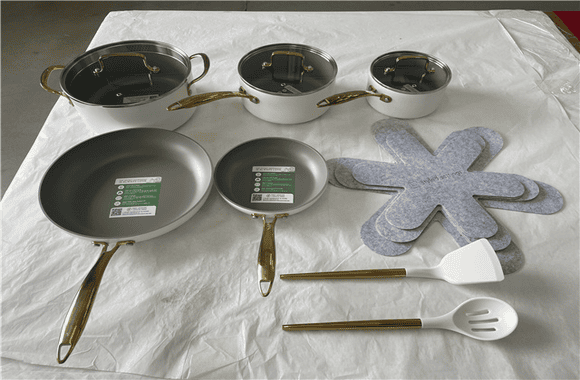
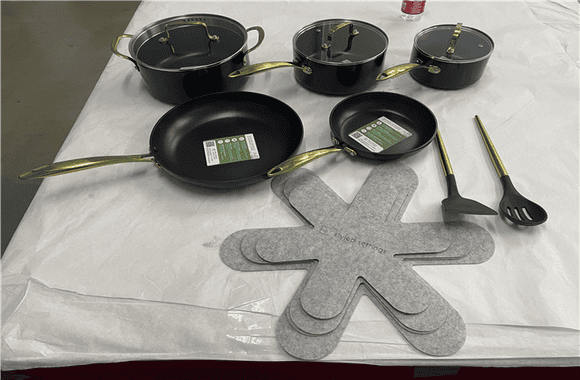
3. Count full set of accessories.
4. Visual inspection for pan body, weld seam, composite bottom, handle, glass lid, spatula.
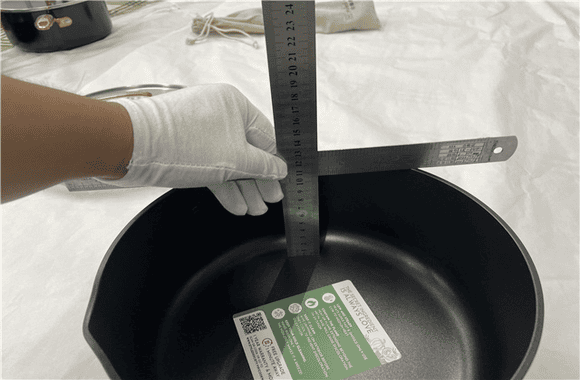
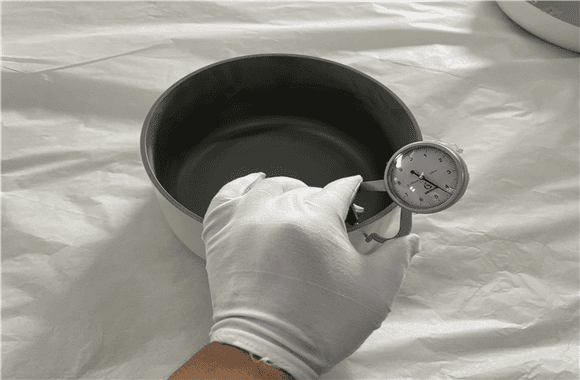
5. Dimension measurement: pan-mouth diameter, bottom diameter, height, material thickness, composite-bottom thickness.
6. Assembly check: handle firmness, lid fitting, composite-bottom adhesion, pan roundness.
7. On-site functional tests: capacity, bottom flatness, water-leak test, magnet test for induction cookware, 45-degree lid drop test, handle torque test, simple corrosion spot check, dry-burn spot-check with fire safety precaution.
8. Verify marking and user manual safety warnings.
9. Count defects, take photos, judge accept / reject and generate inspection report.
10. Provide Container Loading Supervision service upon request.
2 Key Inspection Items
Visual Inspection
- Pan body: No penetrating crack / pinhole / hazardous sharp burr. Weld seam smooth, no cold-weld / blowhole. Composite-bottom no warping or peeling. Logo & material grade marking clear.
- Handle & knob: Rivet / weld tight; no crack; no hazardous sharp burr on any edge.
- Glass lid: No crack or chipping.
- Spatula / ladle: Edge smooth without sharp burr.
Dimension Measurement
Measure pan mouth, bottom, height, material thickness, composite-bottom thickness. Actual thickness ≥85% of nominal value.
Assembly & Functional Test
- Handle Torque Test: Twist handle-pan joint; no loose or rotating movement.
- Capacity Test: Actual capacity ≥95% of declared nominal volume.
- Bottom Flatness & Rocking Test: No outward bulge on cold bottom; excessive rocking = Major defect.
- Water-Leak Test: Fill with room-temp water and hold 30 min; no seepage or dripping. Leakage = Critical defect.
- Magnet Test for induction-ready pan: Bottom composite layer shall be magnetic for induction hob. Non-magnetic = Major defect.
- 45-degree Lid Test: Lid shall not fall off when pan tilts 45°.
- Simple corrosion spot check: Water wipe inner surface and hold 30 min; visible rust spot = Major defect.
Marking & Manual
Mark material grade (304 /316), applicable heat source, brand and origin. Safety warning against dry-burn risk shall be included in manual.
3 Defect Classification
- Critical Defect: Penetrating crack / pinhole, water leakage, hazardous sharp burr, cracked glass lid. One found → full-batch rejection.
- Major Defect: Loose handle joint, defective weld, composite-bottom peeling / hollow, insufficient capacity, serious bottom warping, induction-pan non-magnetic, lid falls at 45°, missing key marking / warning. Reject batch if over-limit, full rework required.
- Minor Defect: Light cosmetic scratches, tiny pit, slight carton dent. Allowed for release within AQL limit, continuous process improvement required.
4 Conclusion
Stainless-steel cookware involves multi-dimension risks including food-contact safety, weld structural strength, composite-bottom adhesion and corrosion resistance. Guangdong China Inspection and Testing Co., Ltd delivers comprehensive Inspection Service, covering Product Inspection Service, Pre-production inspection, Container Loading Supervision, Pre-Shipment Inspection in China and general China quality inspection. This standard can be referenced by local and overseas Inspection Company, Quality Inspection Company for bulk-shipment quality risk mitigation.