
Issued by: Guangdong China Inspection and Testing Co.,Ltd |
Defect Levels
1. Critical Defect (Zero Tolerance): Risk of electric shock, fire or food-safety hazard. One defective unit → full-batch rejection, shipment prohibited.
2. Major Defect: Core-function failure affecting normal usage. Batch rejected if over limit, re-inspection after rework.
3. Minor Defect: Only cosmetic blemishes, no safety / function impact. Acceptable within allowed quantity, process improvement required.
Sampling Rules
Follow GB/T2828.1-2012. Electrical safety items are 100% inspected. Destructive tests adopt reduced sample size. If calculated sample size exceeds total lot quantity, carry out 100% inspection.
1 Inspection Items & Acceptance Requirement
1.1 Packaging & Accessories
Outer carton shall match approved sample, no damp or heavy damage. Barcode scannable. Inner bag intact. Labels correctly pasted. All accessories complete without missing parts.
1.2 Appearance & Structure
View at 45°, 25-30 cm distance.
Area-A (food-contact surface): No rust, deep scratch or deformation. Scratch on inner pot = Major defect.
Logo misprint = Critical defect. Logo printing shall not peel after tape & alcohol test.
Lid opens / closes smoothly without jamming. No conductive metal debris inside unit.
Weight and inner-pot volume shall comply with sample.
Handle temperature shall not exceed specification; inner-pot no water seepage after water-filling standing test. Coating shall not peel in cross-hatch test.
Food-contact glass crack = Critical defect. Food-contact material must meet national food-safety requirements.
1.3 Internal Components (Spot-check by disassembly)
Key components and internal wiring must comply with certified documents. Mismatch = Critical defect.
1.4 Electrical Safety & Performance
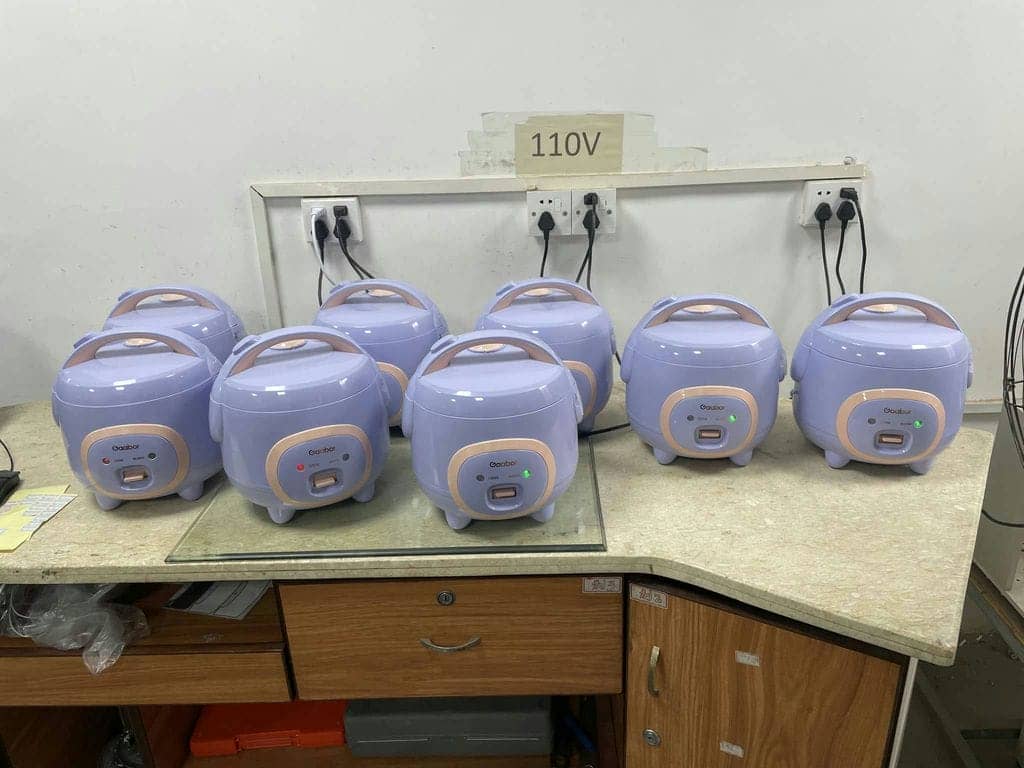
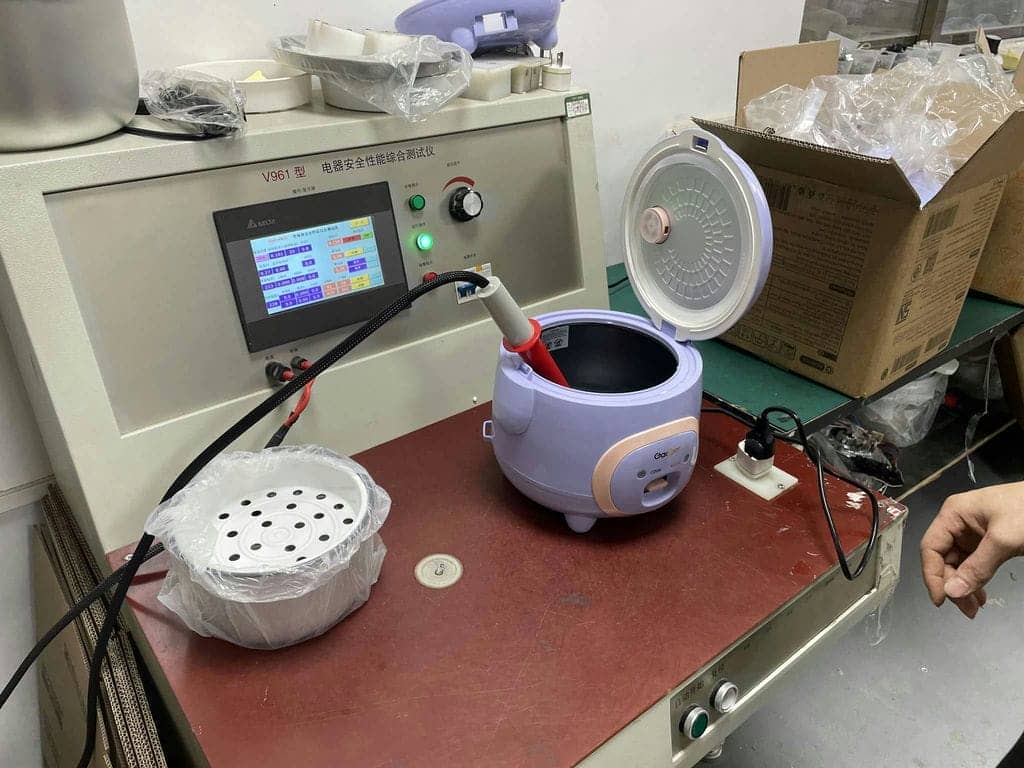
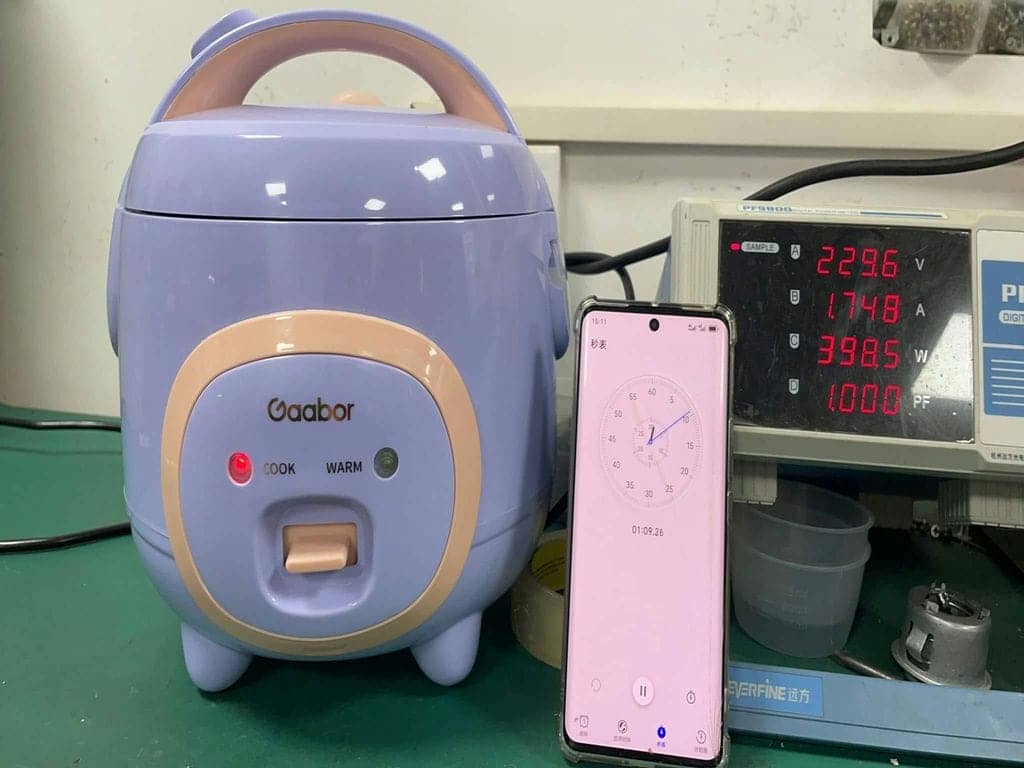
Input power within tolerance range. All electrical-safety items 100% tested. Any safety failure = Critical defect.
Protection devices shall activate reliably under abnormal conditions. Electronic firmware version matches sample.
Aging test: no melting or fire risk during dry-burn & long-time water-boiling.
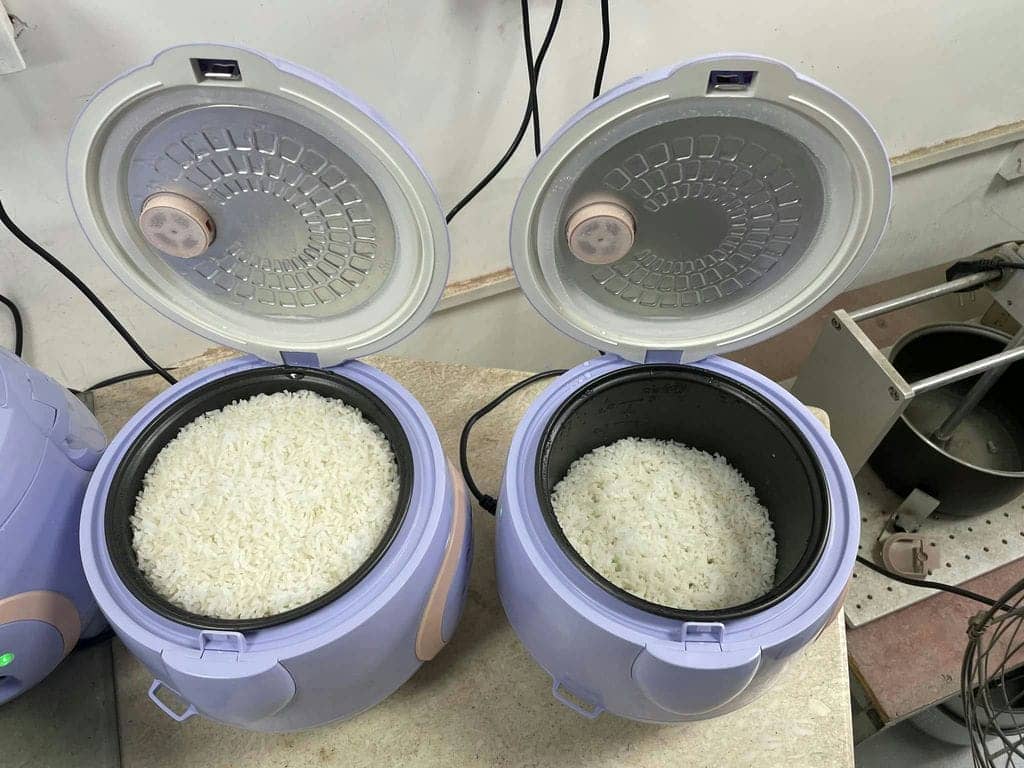
No heavy air leakage except exhaust outlet. Real-cooking test: rice fully cooked, no heavy overflow.
Carton drop test (1 m height). No strong pungent odor.
2 Inspection Workflow
1. Determine sample quantity; safety items 100% inspected; destructive tests with small sample size.
2. Check carton, inner package, labels and accessories.
3. Inspect appearance, gap, foreign-object, lid operation and stability.
4. Sampling tests for logo, dimension, weight, volume, coating and glass parts.
5. Spot-check internal components and wiring by disassembly.
6. Carry out electrical safety and power test.
7. Run protection, aging, air-tightness, real-cooking, drop-test, temperature-rise and water-seepage test.
8. Odor assessment.
9. Count defects and judge accept / reject.
10. Fill inspection report. Qualified lots for shipment; non-conforming lots segregated for full rework and re-inspection.
3 Defect Classification
• Critical Defect: Hipot breakdown, leakage / earth failure, logo misprint, inner-pot seepage, coating peeling, over-temperature handle, conductive metal debris inside unit, mismatched certified components, wrong wiring, uncooked rice / heavy overflow, melting & fire risk, broken food-contact glass, non-compliant food-contact material. One found → full-batch rejection.
• Major Defect: Unreadable barcode, missing main accessories, scratch on inner-pot, lid jamming, out-of-spec dimension / weight / volume, glass crack after thermal-shock, severe air leakage, functional damage after drop, strong pungent odor. Reject batch if over-limit, full rework required.
• Minor Defect: Slight carton dent, minor sticker bubble, acceptable scratches on non-key surfaces, slight wobble. Allowed for release within limit, continuous process improvement required.
4 Conclusion
Rice cookers and electric hot pots involve dual risks of electrical safety and food-contact-material compliance. Guangdong China Inspection and Testing Co., Ltd provides full-chain QC covering packaging, appearance, electrical safety, coating, temperature-rise and real-cooking performance to help manufacturers mitigate batch-quality risks for domestic and export shipment.