
1. Core Safety Requirements (Zero-Tolerance Defects)
All safety defects are critical. Any non-compliance will result in immediate rejection and prohibit warehousing & shipment.
1.1 Small Parts Fastness
All external fittings (eyes, noses, buttons, hats, bows, bells, patches) and hanging accessories (straps, loops, ribbons) shall be firmly fixed without looseness, offset or falling-off risks. They shall withstand simulated children’s pulling, twisting and rubbing. For toys for children under 36 months, no small parts can be removed by hand to avoid choking and swallowing hazards.
1.2 Shape & Size Safety
Toys for children under 36 months shall not contain solid spheres, cylinders or sharp protrusions with diameter ≤31.75mm. No ultra-small detachable parts that may cause accidental swallowing. Products for ages above 36 months shall avoid fragile micro spherical accessories.
1.3 Filling Material Safety
Only new, clean, dry and odorless qualified polyester filling is allowed. No recycled cotton, black cotton, damp, moldy or contaminated fillers. Finished products shall have no pungent chemical, mildew or peculiar odors.
1.4 Cord & Strap Safety
The free length of all exposed cords, straps and ribbons shall be ≤22cm to prevent entanglement and strangulation risks. All cord ends shall be securely locked without fraying or looping hazards.
1.5 Edge & Burr Safety
All fabric cuts, accessory edges and stitching edges shall be smooth without sharp corners, burrs or hard edges to prevent skin scratches.
2. Appearance & Workmanship Requirements
2.1 Shape & Color Standard
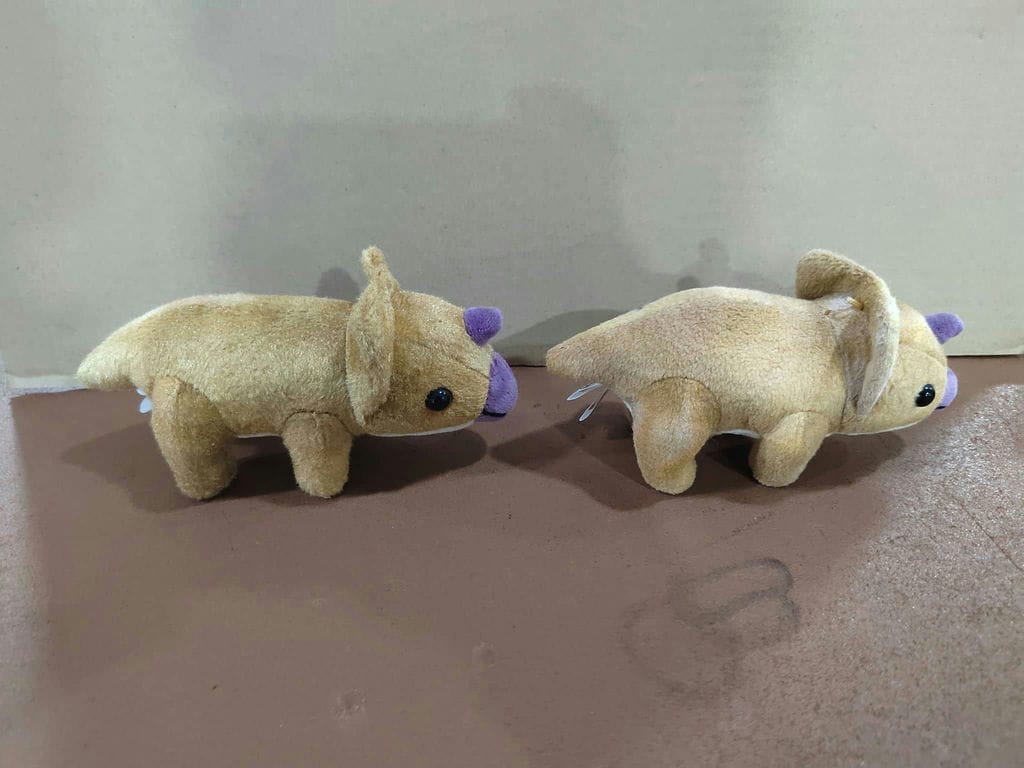
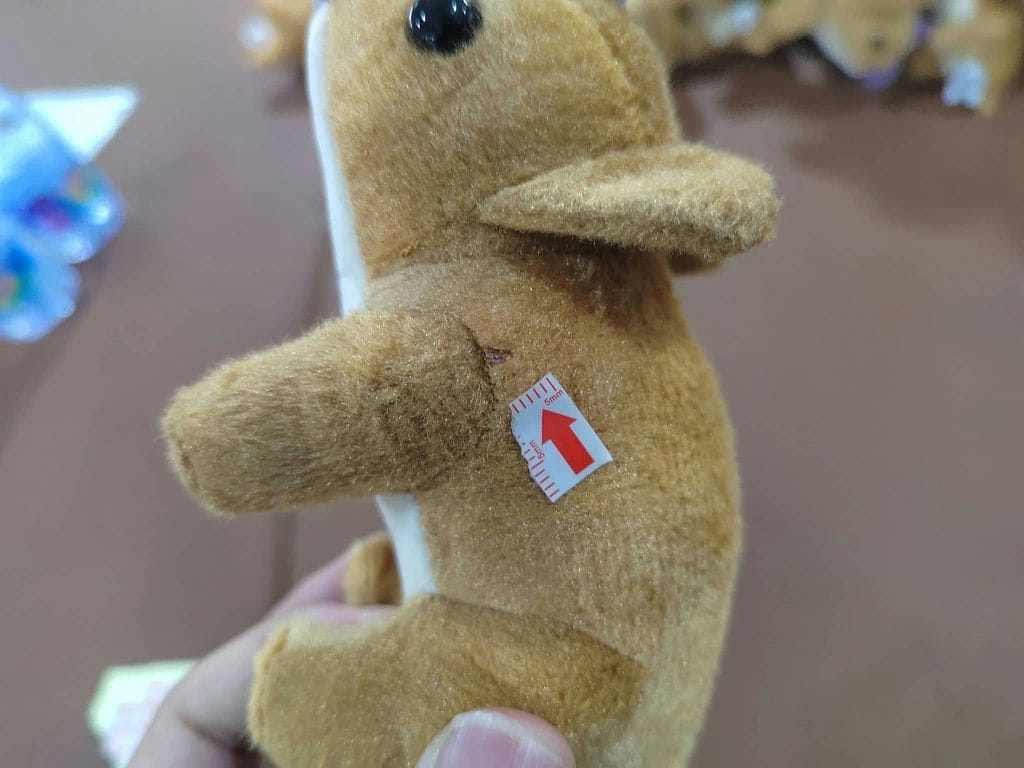
Product shape, proportion and posture shall be fully consistent with approved samples and design drawings with symmetrical features and no deformation. Batch color shall be uniform, no color difference, fading or color bleeding. All prints, heat transfers and embroideries shall be clear, accurate in position, complete and edge-neat. No loose threads, stains, dust or oil marks on product surface.
2.2 Sewing Standard
Stitches shall be even, uniform and free of skipped, broken or floating stitches. Main seams, neck & limb joints and strap connection points shall be tightly stitched, resistant to pulling without cracking or thread loosening. Fabrics shall be neatly cut without burrs or missing corners. Filling shall be full and evenly distributed with no hollow areas, dents, lumps or uneven hardness, featuring soft hand feel and good resilience.
2.3 Accessory Quality
Plastic, metal, fabric and acrylic accessories shall be smooth, crack-free, deformation-free and scratch-free, tightly fitted without looseness. Surface paint and prints shall be firm with no peeling, fading or oxidation. Batch accessories shall keep uniform color.
3. Physical Performance Requirements
3.1 Pilling Resistance
Plush fabrics shall not pill, mat or shed seriously after daily friction and rubbing, maintaining smooth surface and intact appearance without bare base fabric.
3.2 Color Fastness
Fabrics, prints, embroideries and accessories shall resist discoloration and staining after dry & wet friction, sweat immersion, saliva simulation and washing (if washable), no color transfer or fading.
3.3 Seam Tensile Strength
All stitching seams shall withstand normal manual tension without thread loosening or seam cracking. High-stress joints (head, limbs, strap connections) shall have higher tensile resistance.
3.4 Hanging Fitting Strength
Hanging loops, cords, metal buckles and connection points shall be sturdy enough to withstand repeated hanging and accidental pulling without breaking, loosening or deformation.
4. Packaging & Labeling Compliance
4.1 Labeling Specification
Main Label: Complete and clear information including product name, material, execution standard, age grade, safety warnings, manufacturer info, production date and batch number. Products for children under 36 months must be marked with mandatory choking hazard warnings.
Wash Label: Clear washing instructions (hand wash only, no machine wash, no ironing, etc.) for washable products; mark “wipe clean only” for non-washable products.
4.2 Packaging Requirements
Individual packaging (OPP bag, blister, gift box) shall be intact, clean and well-sealed for dustproof, moistureproof and anti-collision protection. Outer cartons shall be firm with clear batch and quantity marks, no damage or dampness, meeting sales and transportation requirements.
5. Standard On-Site Inspection Procedure
5.1 Sampling Rule
Random sampling (no selective picking). ≤50pcs: 10pcs sampling; 51–200pcs: 20pcs sampling; >200pcs: 10% sampling (minimum 20pcs). Safety items are fully inspected; 1 critical defect leads to immediate batch rejection.
5.2 Five-Step Inspection Method
1. Visual Check: Verify shape, color, prints, stitching, cleanliness and labeling consistency with approved samples.
2. Touch Check: Test softness, surface smoothness, no burrs, and confirm even & full filling.
3. Smell Check: Inspect for any pungent chemical, mildew or peculiar odor.
4. Pull Check: Manually pull small parts, accessories, straps and seams to confirm fastness and no cracking or loosening.
5. Compliance Check: Verify complete and accurate labels, warnings, batch and packaging information.
6. Defect Classification & Judgment Criteria
6.1 Critical Defect (CR, Zero Tolerance)
Detachable small parts, overlength cords, sharp edges, abnormal odor, unqualified filling, non-compliant infant size. Result: full batch rejection, rework or scrap, shipment prohibited.
6.2 Major Defect (MA)
Severe deformation, obvious color difference, incomplete prints/embroideries, cracked seams, serious pilling/shedding, accessory peeling/damage, missing key compliance labels. Result: batch rejection if sampling rate exceeds standard.
6.3 Minor Defect (MI)
Slight loose threads, negligible local color difference, wipeable minor stains, slight uneven hand feel. No impact on safety, function and overall appearance, allowed for release or minor rework.