
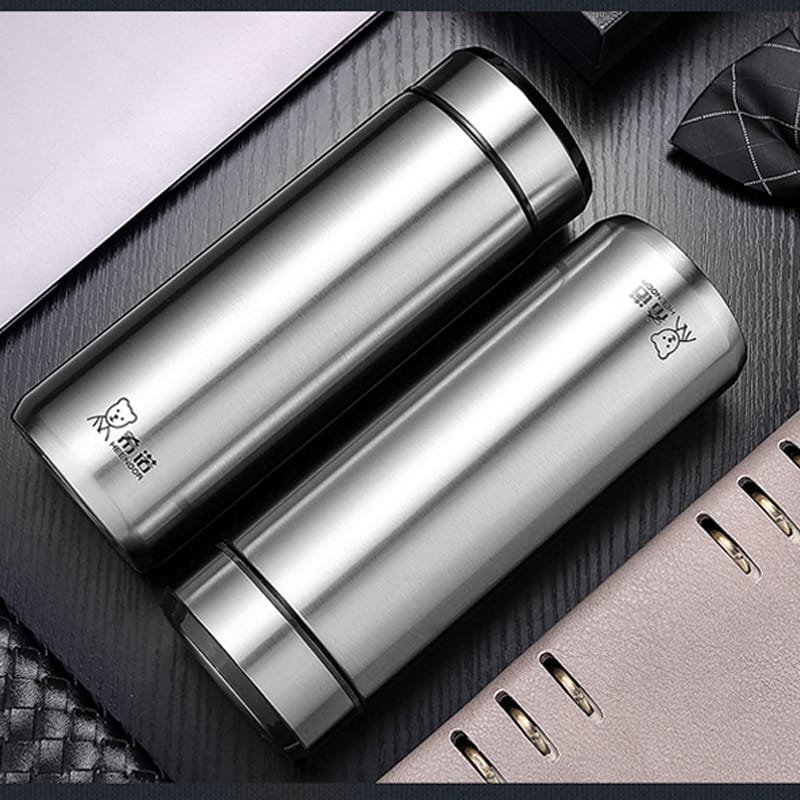
1. Pre-Inspection Preparation
Documents: Sales order, 304/316 stainless steel material certification, product specification, label requirements and customer color standard.
Testing Tools: Stainless steel detection solution, vernier caliper, measuring cup, timer, dry and wet wipes.
Environment: Normal indoor temperature with clean and tidy workbench.
2. Document & Label Verification
Verify cup bottom markings and stickers: marked with 304 stainless steel (cup body), 316 stainless steel (straw), capacity specification and safety warnings (no boiling water, adult supervision for children use). Brand logo and printing shall be clear without blurriness or typos.
Check outer carton and color box for correct model, color, quantity, material description and shipping marks consistent with PO requirements. Confirm complete user manual with material introduction, cleaning instructions and usage prohibitions.
Rejection Standard: Wrong or missing material marking, blurred printing information.
3. Appearance & Structural Inspection
Cup Body (304 Stainless Steel)
The outer surface shall be free of dents, collisions, scratches, paint peeling and color difference with uniform spraying and no particles or exposed base material. The inner wall features smooth polishing without pinholes, black spots, rust or scratches; welding seams are flat and burr-free. The cup bottom is flat and deformation-free with firmly attached bottom labels.
Cup Lid Assembly
Plastic parts have no shrinkage, burrs, whitening or cracks. The flip cover opens and closes smoothly with proper buckle tension, no automatic popping or jamming. Decorative sheets are scratch-proof and plating-intact without loosening. Silicone sealing ring is complete, odorless, correctly installed and non-detachable.
316 Stainless Steel Straw
Smooth surface without burrs, sharp edges, scratches and rust spots with smooth cutting edges. The shape and size comply with approved samples without bending cracks.
Rejection Standard: Deep scratches, inner wall rust, cup dents, cracked plastic parts, sharp straw burrs.
4. On-Site Material Verification
Adopt professional stainless steel test solution for preliminary on-site screening (for reference only, not replacing laboratory spectrum test reports).
304 Cup Body Test: Drop dedicated test solution on inner wall; qualified if no red discoloration, unqualified if red.
316 Straw Test: Apply 316 special test solution; qualified for no obvious color change, unqualified if red discoloration occurs.
Clean test traces immediately to avoid corrosion. Material inconsistency is defined as Critical Defect for full batch rejection. Official material analysis reports are mandatory for formal shipment.
5. Tightness & Leakage Test
Fill the cup with room-temperature water to rated capacity, tighten the lid and invert for 5 minutes. Slightly shake the cup to inspect the lid and straw hole position. Any water seepage or dripping is unqualified. The flip cover shall not pop open and cause leakage during shaking after correct closure.
6. Functional Test
Flip the cover open and closed repeatedly 20 times; the buckle keeps firm and intact with normal rebound. The straw can be inserted and pulled out smoothly without falling off easily, ensuring unobstructed drinking. The sealing ring is easy to assemble and disassemble without affecting tightness. For double-wall vacuum cups, no obvious outer wall overheating occurs when filled with 80℃ hot water.
7. Safety & Odor Inspection
Rinse the cup body, lid and straw thoroughly; check for pungent plastic odor or abnormal metal odor. Persistent peculiar odor leads to direct rejection. Inspect all edges and cutting positions for sharp burrs to prevent hand injury; plastic parts are free of sharp fragments and rough edges.
8. Dimension & Weight Verification
Measure cup height, caliber and bottom diameter via caliper, ensuring all dimensions are within customer tolerance range compared with drawings and samples. Weigh the full set (cup body + lid + straw); excessive weight deviation requires wall thickness recheck.
9. Packaging Inspection
Single product is protected by color box or bubble bag with surface protective film to prevent scratch damage. Outer carton meets hardness standard with accurate printed quantity and separated inner placement to avoid collision damage. Complete accessories including straw and user manual are mandatory for each package.
10. Defect Classification
CR (Critical Defect, Full Batch Rejection)
Inconsistent material (non-304 cup body / non-316 straw), water leakage and seepage, inner wall rust, sharp metal burrs, pungent harmful plastic odor.
MA (Major Defect, Product Rejection)
Large-area cup scratches, dents and paint peeling, failed flip buckle function, wrong logo/material label printing, deformed or blocked straw.
MI (Minor Defect, Negotiable Concession)
Tiny cosmetic spots without affecting usage and overall appearance, slight color difference within customer approval range.