
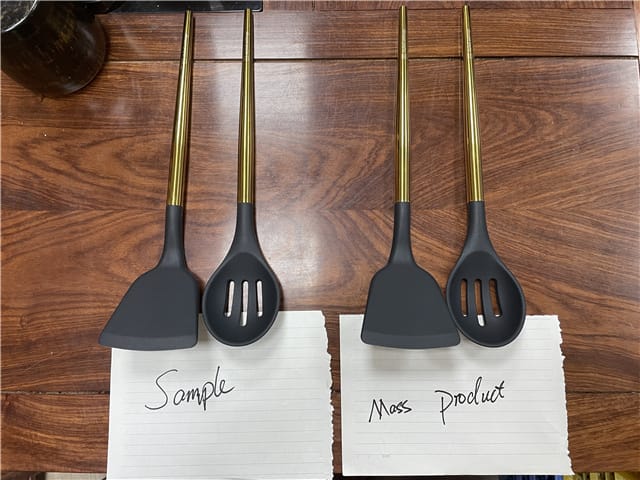
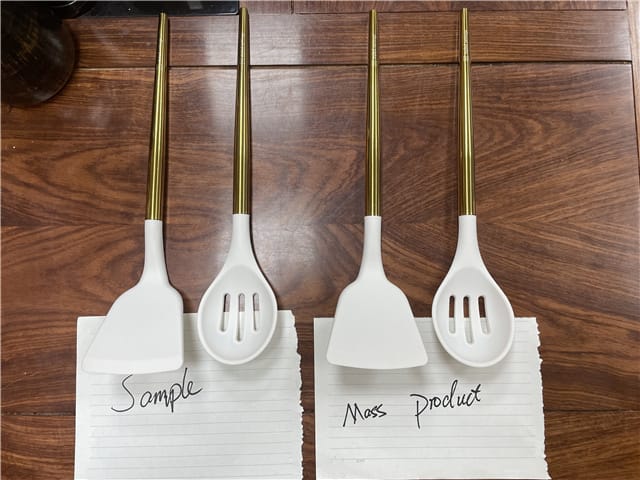
Issued by: Guangdong China Inspection and Testing Co., Ltd, holding authoritative qualifications including CMA, CNAS, ISO/IEC17020, ISO9001, providing integrated service of on-site inspection, sample sealing & laboratory testing. |
Sampling Rules
Follow GB/T2828.1-2012 (equivalent to ANSI/ASQ Z1.4), General Inspection Level-II, random sampling. Destructive tests such as bending, boiling-water soak sampled as required. If calculated sample size exceeds total lot quantity, perform 100% inspection.
Defect Levels
1. Critical Defect (Zero Tolerance,AQL=0): Sharp flash / burr, exposed sharp metal insert, product hole / penetration crack. Even one defective unit → full-batch rejection, shipment prohibited.
2. Major Defect (AQL=2.5): Delamination between silicone and insert, mass bristle falling-off, large / dense air bubble, big impurity spot, crack after bending / pull test, heavy oil precipitation under boiling test, strong pungent odor, missing mandatory marking / warning. Reject batch if over-limit, re-inspection after rework.
3. Minor Defect (AQL=4.0): Tiny harmless flash, small enclosed bubble ≤1 mm, minor faint stain, slight mould mark, minor carton dent. Acceptable within allowed quantity, process improvement required.
1 Inspection Workflow
1. Check outer carton, shipping mark and PO documents.
2. Inspect color box, inner protective packing, manual and warning label.
3. Count complete set of accessories.
4. Visual inspection: flash, burr, air bubble, impurity, color difference, over-mould bonding status, bristle condition.
5. Dimension measurement: total length, head width, handle length, wall thickness, ice-cavity dimension.
6. Assembly check: insert bonding firmness, bristle pull-resistance, ice-tray cavity integrity.
7. On-site functional screening: bending-rebound test, pull strength test, flash-tear check, boiling-water soak spot-check, oil-wipe test, odor sensory test.
8. Verify marking, temperature-range marking (nylon-bristle temperature limit included) and user manual safety warnings.
9. Count defects, take photos, judge accept / reject and generate inspection report.
10. Provide Container Loading Supervision service upon request.
2 Key Inspection Items
Visual Inspection
- No sharp flash / cutting burr; no penetrating hole. Large or dense air-bubbles = Major defect.
- Food-contact surface free of big foreign-particle impurity.
- Over-mould part: no delamination or open gap between silicone and metal / plastic insert.
- Basting brush: no mass bristle loss.
- No exposed sharp metal edge.
Dimension & Assembly
Measure length, width, thickness, cavity dimension against approved sample. Check joint bonding, handle firmness and ice-tray cavity condition.
On-site Functional Screening
1. Bending-rebound Test: bend product 180° for 10 cycles, no crack / whitening / breakage.
2. Pull-Strength Test: pull edge and weak position, no tearing or crack.
3. Flash-Tear Check: flash shall not cause product notch or tear after hand-tearing.
4. Boiling-Water Soak Spot-Check: soak 10-15 min (small sample, anti-scalding). No heavy oil precipitation, severe deformation.
5. Oil-Wipe Test: oil applied on surface, no hard-to-remove oil exudation.
6. Odor test: No pungent solvent or plastic smell; slight inherent silicone smell is acceptable.
Marking & Manual
Mark material (food-contact silicone), working temperature range, temperature limit for nylon bristle if applicable, brand and origin. Safety warning: Do not expose to open-fire, avoid sharp-blade cutting. Mandatory translated warning for export orders.
3 Defect Classification
- Critical Defect: Sharp flash / burr, exposed sharp metal, penetrating hole. One found → full-batch rejection.
- Major Defect: Over-mould delamination, mass bristle drop, large / dense bubble, impurity spot, crack under bending / pull test, heavy oil exudation, pungent odor, missing safety warning. Reject batch if over-limit, full rework required.
- Minor Defect: Harmless tiny flash, small enclosed bubble ≤1 mm, faint surface stain, slight carton dent. Allowed for release within AQL limit, continuous process improvement required.
4 Conclusion
Silicone kitchenware involves risks of sharp edge hazard, over-mould delamination and harmful substance precipitation under high-temperature usage. Guangdong China Inspection and Testing Co., Ltd delivers comprehensive Inspection Service, covering Product Inspection Service, Pre-production inspection, Container Loading Supervision, Pre-Shipment Inspection in China and general China quality inspection. With full qualification system of CMA, CNAS, ISO/IEC17020, ISO9001, to guarantee impartial inspection procedure and credible inspection reports. This standard can be referenced by local and overseas Inspection Company, Quality Inspection Company for bulk-shipment quality risk mitigation.