Methods and Process for Third-Party On-Site Electronic Scale Inspection
Professional Third-Party Inspection Company · On-Site Quality Inspection · Pre-Shipment Inspection Guide
Electronic scales are among the most widely used weighing instruments for commercial settlement, logistics weighing, and production batching; their measurement accuracy directly affects trade fairness, cost accounting, and regulatory compliance. For export orders, e-commerce warehousing, and supply-chain quality control, having an independent third-party inspection company send professional inspectors on site to carry out on-site quality inspection and weighing checks on electronic scales has become a standard practice for more and more companies to mitigate quality and settlement risks. Compiled by Huajian Inspection, this article systematically introduces the methods and process of third-party on-site electronic scale inspection, helping you quickly grasp the key points of on-site inspection and pre-shipment inspection.
1 What Is Third-Party On-Site Electronic Scale Inspection
1.1 Definition
Third-party on-site electronic scale inspection refers to a quality inspection service in which a third-party inspection agency independent of both the buyer and the supplier sends professional QC inspectors to the factory, warehouse, or loading site to carry out on-site inspection and testing of electronic scales—covering quantity, appearance, marking, metrological performance, and packaging—in accordance with order requirements, product specifications, and applicable metrological rules, and then issues a third-party inspection report. Its purpose is to provide customers with objective, true product quality information before shipment, helping them identify potential issues and decide on shipment, rectification, or rework.
1.2 Difference from Statutory Metrological Verification
Statutory metrological verification is conducted by legal metrological technical bodies in accordance with national metrological verification regulations and is legally mandatory. Third-party on-site electronic scale inspection is a market-based quality inspection service that focuses more on on-site quality inspection, functional testing, and appearance and workmanship checks performed according to the customer’s order requirements and industry practice. The two complement each other: third-party inspection provides trading parties with more flexible, order-specific on-site quality control.
2 Why Choose Third-Party On-Site Electronic Scale Inspection
· Independence and impartiality: Inspectors are independent of both the buyer and the supplier, so third-party inspection results are objective and credible, avoiding self-inspection bias.
· Professionalism and efficiency: Professional inspectors are familiar with the appearance, workmanship, function, and weighing inspection points of electronic scales, making on-site quality inspection fast and accurate.
· Nationwide coverage: On-site inspection services cover major manufacturing regions across China and overseas markets, with flexible arrangements for resident factory inspection and traveling inspection.
· Traceable reports: Bilingual (Chinese-English) inspection reports are issued, including inspection results, problem descriptions, and on-site photos, facilitating supplier audits and accountability tracing.
· Application scenarios: pre-shipment inspection for export orders to Europe and the US, e-commerce platform quality inspection, supplier audits and factory audits, weighing checks for trade settlement, and inspection before container loading supervision.
3 Inspection Methods for Third-Party On-Site Electronic Scale Inspection
Third-party on-site electronic scale inspection mainly follows the inspection items of JJG 539-2016 "Verification Regulation of Digital Indicating Instruments" (数字指示秤检定规程), combined with order requirements and product specifications for on-site quality inspection. Common inspection methods are as follows:
3.1 Visual and General Technical Requirements Check
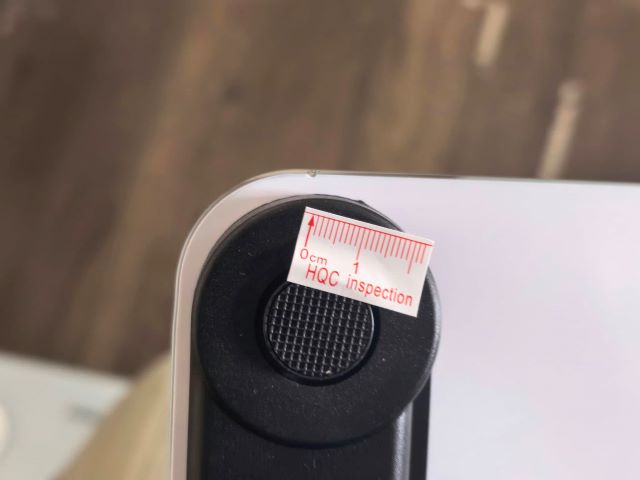
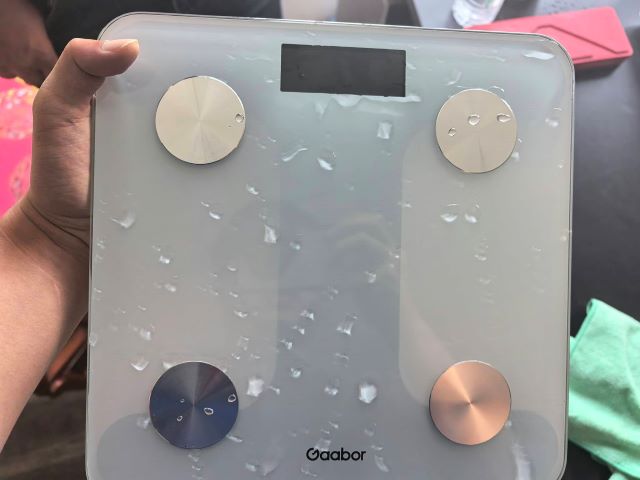
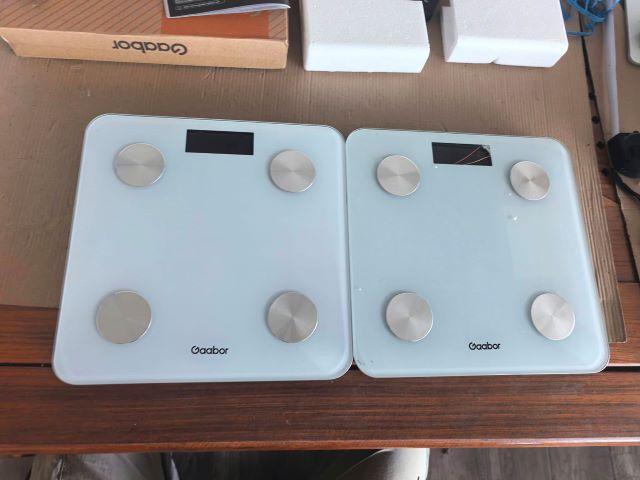
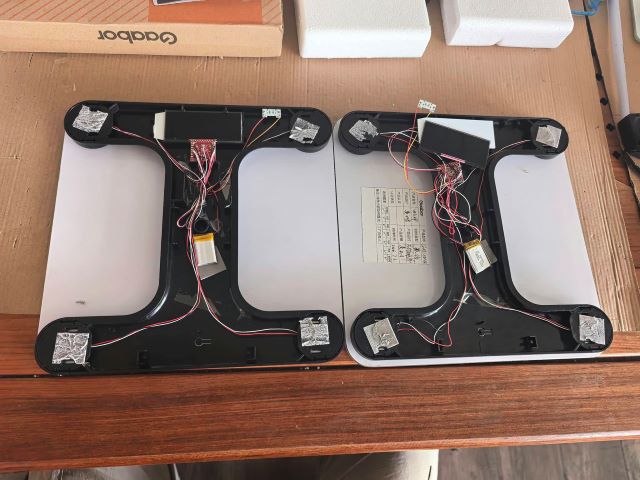
Check the model, specification, manufacturer, instrument serial number, and accuracy class on the nameplate to confirm consistency with the order and the standard; inspect the overall appearance, keypad, display, load cells, and weighing platform for integrity; pay special attention to whether the lead seal is intact and whether there are signs of unauthorized modification or tampering. In metrological inspections, market regulators commonly use the “check the nameplate, check the lead seal, verify the weighing” approach, and third-party on-site quality inspection covers the same items.
3.2 Zero and Return-to-Zero Test
Confirm the indication is zero when the scale is empty, or check whether it returns to zero properly after unloading; check whether power-on self-check, zero setting, and automatic return-to-zero functions work correctly.
3.3 Indication Error (Weighing Test)
Use standard weights to gradually load from zero up to the maximum capacity and then unload in reverse order; read the indications at the minimum weighing, maximum capacity, and key load points, and calculate whether the indication errors are within the allowable range. Loading and unloading should be smooth, and data should be recorded point by point.
3.4 Eccentric Load Test
Place the same load at the four corners and center of the platform successively and check the indication differences at different positions to verify the uniformity of force distribution on the platform.
3.5 Repeatability Test
Weigh the same load multiple times under identical conditions and compare the consistency of the readings to verify the stability and repeatability of the scale.
3.6 Discrimination Test
Gently apply a small load on a stable indication and check whether the scale responds with the corresponding indication change, to verify its discrimination ability.
3.7 Tare Weighing Test
Use a container for taring and then weigh with the load, to verify the tare function and the weighing accuracy after taring.
3.8 Sampling and 100% Inspection
According to customer requirements and the mutually confirmed sampling standard (e.g., AQL sampling), random sampling inspection is carried out and the results of the samples are used to infer the quality of the whole batch. For batches requiring 100% control, full inspection (100% inspection) may be adopted, in which each scale is inspected one by one to strictly screen out good and defective products.
Note: The specific value judgment of the above inspection items shall be based on the mutually confirmed inspection requirements, product specifications, and applicable standards (including JJG 539-2016), and the inspector executes the inspection according to standard procedures and records the results truthfully.
4 Workflow of Third-Party On-Site Electronic Scale Inspection
4.1 Booking and Order Placement
The customer provides the inspection date, factory address and contact person, product name and model, order quantity, product specification or approved sample, and any specific inspection requirements of concern. Booking can be made online or arranged with a business representative.
4.2 Documentation Confirmation and Plan Development
The inspection company confirms the sampling standard (AQL sampling or 100% inspection), inspection items, schedule, and fees, and develops an on-site quality inspection plan.
4.3 On-Site Preparation
The inspector arrives on site at the agreed time, carrying standard weights, measuring and recording tools, and checks the on-site environment and the condition of the goods to be inspected.
4.4 On-Site Inspection
Test and check each item one by one according to the inspection methods, record data, take photos as evidence, and feed back any issues to the customer promptly.
4.5 Result Assessment and Corrective Recommendations
Assess the quality of the batch based on the inspection results and acceptance criteria, and provide recommendations for rectification, rework, or re-inspection for any issues found.
4.6 Issuing the Inspection Report
After the on-site inspection is completed, the formal inspection report is usually issued on the next working day and sent in PDF format. The report contains the inspection results, problem descriptions, on-site photos, and other information.
4.7 Re-inspection Follow-up
If rectification and re-inspection are required, the inspector can arrange re-inspection as agreed until the customer confirms release. Container loading supervision can also be added before shipment for end-to-end quality control.
5 Inspection Items and Methods at a Glance
Table 1 Common Inspection Items and Methods for Third-Party On-Site Electronic Scale Inspection
Inspection Item | Inspection Method | Key Points of Concern |
Visual and markings | Visual check of nameplate, markings, and appearance | Model, manufacturer, serial number, intact lead seal, anti-tampering |
Zero and return-to-zero | Empty-scale indication, return-to-zero after unloading | Zero setting and return-to-zero functions work properly |
Indication error (weighing) | Gradual loading/unloading with standard weights | Indication errors at all load points within allowable range |
Eccentric load | Load placed at four corners and center | Consistent readings at all positions |
Repeatability | Weigh the same load multiple times | Stable and consistent readings |
Discrimination | Gently apply a small load | Indication responds to change |
Tare weighing | Tare, then weigh with load | Accurate tare function |
Function and packaging | Keypad, display, packaging check | Functions work properly, packaging meets requirements |
Note: Sampling inspection can be performed according to the mutually confirmed AQL sampling standard. For small batches with high risk, 100% inspection can be adopted. The specific inspection items are based on customer requirements and product specifications.
6 Frequently Asked Questions
6.1 How is electronic scale inspection charged?
Fees mainly depend on the service type, product complexity, inspection location, number of inspectors required, workload, and travel arrangements. Remote areas or special service requirements may incur additional fees. After the customer submits basic order information, the inspection company will provide a clear quotation, and the final fee is subject to the formal quotation.
6.2 How soon can the inspection report be issued?
After on-site inspection is completed, the formal inspection report is usually issued on the next working day and sent in PDF format. No formal report is issued on Sundays or Chinese statutory holidays; if a rest day is encountered, it will be sent on the next working day.
6.3 Which areas are covered?
Third-party inspection services cover major manufacturing regions across China and multiple overseas markets, with a service network spanning 150+ countries and regions. Whether an inspection can be arranged depends on the inspection location, date, product type, and the availability of local inspectors, so it is recommended to book in advance.
6.4 What if problems are found during the on-site inspection?
The inspector will record the problems and provide photo evidence, and the relevant issues will be reflected in the inspection report. The customer can communicate with the supplier for rectification, rework, or shipment arrangements based on the report, and can also arrange re-inspection after rectification is completed. Whether to ship ultimately depends on the customer’s decision based on the order requirements and actual risks.
7 Service Advantages and Coverage Areas
Huajian Inspection relies on professional expertise, strict control, and honest service to provide third-party inspection, factory audit, and supply-chain quality control services to global import and export traders, multinational buyers, and brand retailers. The third-party inspection service network covers major manufacturing regions across China. On-site inspection, resident factory inspection, traveling inspection, and container loading supervision services can be arranged in Guangdong (Guangzhou, Shenzhen, Dongguan, Foshan, Jiangmen, Zhongshan, Chaoshan), Zhejiang (Ningbo, Wenzhou, Yiwu, Taizhou, Shaoxing), Jiangsu (Suzhou, Wuxi, Nantong, Changzhou), Fujian (Xiamen, Quanzhou, Fuzhou, Zhangzhou, Putian), Shandong (Qingdao, Yantai, Weifang, Linyi), as well as Shanghai and Beijing. Customers can arrange a professional third-party inspection company for on-site quality inspection near the order’s place of production to efficiently control shipping quality.
Service advantages: Safety—minimize the quality risk of your goods; Quality—provide improvement measures promptly; Support—help ensure the pass rate of your products; Timeliness—ensure your delivery schedule; Assurance—reduce your commercial risks; Review—review the best suppliers for you; Prevention—prevent potential quality problems; Approval—ensure your goods are loaded correctly and with the exact quantity into the container.
8 Conclusion
Although an electronic scale is small, it concerns trade fairness and settlement safety. Choosing a professional third-party inspection company for on-site quality inspection, weighing inspection, and pre-shipment inspection is an effective way for cross-border trade and e-commerce companies to control quality and avoid risks. As a professional third-party inspection company, Huajian Inspection adheres to the principle of rapid response, professional service, strict control, and impartiality, and provides one-stop third-party quality services including initial production check (IPC), during production inspection (DPI), final random inspection (FRI), pre-shipment inspection (PSI), container loading supervision (CLS), sampling inspection, and 100% inspection, issuing formal bilingual inspection reports to serve export and cross-border e-commerce companies nationwide. If you have any need for third-party electronic scale inspection, on-site inspection, factory inspection, or container loading supervision, please feel free to contact Huajian Inspection—we will serve you wholeheartedly.